
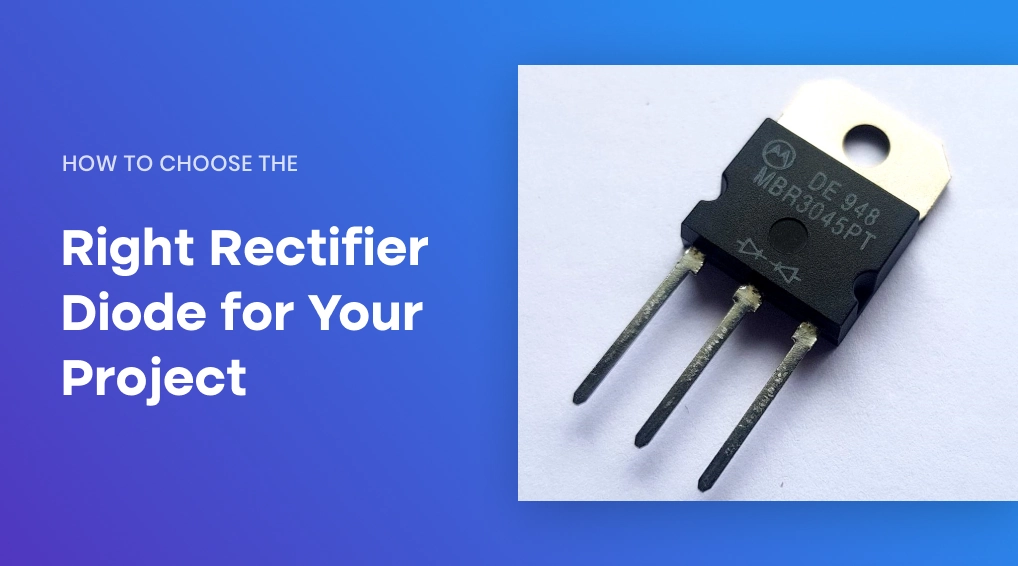
Choosing the right rectifier diode is important for power supply design, electronic repair, and many PCB-based applications. Rectifier diodes are essential components used to convert alternating current (AC) into direct current (DC) by allowing current to flow in only one direction. Many buyers search for a diode by voltage or current only, but the right choice depends on more than that. You also need to check package type, circuit use, reliability, and whether the diode matches the operating conditions of your design.
If the wrong diode is selected, the circuit may overheat, fail under load, or deliver unstable performance. That is why a proper rectifier diode buying guide is useful for beginners, repair technicians, and product designers alike.
In this guide, we will explain how to choose the right rectifier diode in a simple way and when a 1000V 2A standard rectifier diode can be a practical choice.
What Is a Rectifier Diode?
A rectifier diode is a diode used mainly to allow current to flow in one direction while blocking it in the other direction. In a half wave rectifier circuit, the diode is forward biased during the positive half-cycle of the AC voltage, allowing current to flow through the DC load, and reverse biased during the negative half-cycle, blocking current flow. Rectifier diodes are commonly used in circuits that convert AC voltage to DC, such as half wave rectifier circuits, protect against reverse current, or manage power flow in electronic systems. Zener diodes are another type of diode used for voltage regulation and circuit protection.
Rectifier diodes are widely used in:
- power supplies
- adapters
- chargers
- industrial control circuits
- repair work
- general electronic assemblies
They are essential components wherever basic current rectification and protection are needed.
Why Choosing the Right Rectifier Diode Matters
Not every diode is suitable for every circuit. A diode used in a low-power signal circuit may not be suitable for a power-related design. In the same way, a diode with insufficient current or voltage rating may fail in demanding conditions.
That is why you should choose a rectifier diode based on:
- reverse voltage rating
- forward current rating
- package type
- mounting style
- application type
Additionally, important factors such as breakdown voltage, power efficiency, thermal performance, and voltage regulation should be considered to ensure reliable and efficient circuit operation.
A good diode selection process helps improve safety, reliability, and long-term circuit performance.
Types of Rectifier Diodes
Rectifier diodes come in several types, each designed to meet specific performance needs in power supplies and electronic circuits. The most common types include Standard Recovery Rectifier Diodes, Fast Recovery Rectifier Diodes, Super Fast Recovery Rectifier Diodes, and Schottky Rectifier Diodes.
Standard Recovery Rectifier Diodes are typically used in low-frequency applications, such as traditional AC to DC power supplies. They have a relatively high reverse recovery time, which means they are best suited for circuits where switching speed is not critical.
Fast Recovery Rectifier Diodes offer improved switching speed and lower reverse recovery time compared to standard types. These are ideal for mid-frequency applications, including switching power supplies and power factor correction circuits, where faster response is needed to maintain efficiency.
Super Fast Recovery Rectifier Diodes push the performance further, with extremely low reverse recovery times. They are used in high-frequency, high-efficiency circuits such as flyback converters and telecom power systems, where minimizing power loss and heat generation is crucial.
Schottky Rectifier Diodes stand out for their low forward voltage drop, which results in superior efficiency and reduced power loss. Their fast switching speed and low forward voltage make them the preferred choice for low voltage applications, battery powered devices, DC-DC converters, and circuits where high efficiency is a priority. Schottky diodes are also commonly used in OR-ing circuits and high-frequency designs.
Choosing the right type of rectifier diode depends on your circuit’s switching speed, forward voltage drop requirements, and overall efficiency goals.
Step 1: Check the Reverse Voltage Rating
One of the first things to check is the reverse voltage rating.
Peak Reverse Voltage (PRV) and Peak Inverse Voltage (PIV) refer to the maximum voltage a diode can withstand in reverse bias without breaking down. When selecting a rectifier diode, ensure its PRV or PIV rating is at least 1.5 to 2 times higher than the peak AC voltage in your circuit to provide a safe margin and prevent failure due to voltage spikes or transients.
A rectifier diode must be able to block the voltage that appears across it in reverse bias. If the reverse voltage rating is too low, the diode may break down and fail.
For example, a 1000V rectifier diode is useful in applications where higher blocking voltage is required. This makes it suitable for many power-related and general rectification uses where extra voltage margin is important.
If you are unsure, it is safer to choose a diode with a suitable voltage rating rather than one that only barely matches the circuit requirement.
Step 2: Check the Forward Current Rating
The next important factor is current rating.
Current rating tells you how much forward current the diode can handle. If the circuit demands more current than the diode is designed for, it may overheat or fail. The average forward current rating of the diode should be at least 20-50% higher than the maximum output current or continuous load current to prevent overheating and ensure reliable operation. Additionally, pay attention to the surge current rating (IFSM), which indicates the maximum short-term current the diode can withstand—this is especially important for handling high inrush currents when capacitors charge at power-on.
A 2A rectifier diode is often a practical choice for many general electronics and power supply applications where moderate current handling is needed.
This is why checking current rating is essential before you buy a diode online or use it in a PCB design.
Step 3: Understand What a 1000V 2A Rectifier Diode Means
A 1000V 2A rectifier diode gives you two clear pieces of information:
- 1000V indicates the reverse voltage capability
- 2A indicates the forward current handling capacity
This combination makes the diode useful for a wide range of electronic applications where both decent voltage tolerance and moderate current handling are needed.
For many buyers, this type of diode is a strong option because it offers a practical balance between protection and usability.
Step 4: Check the Package Type
Package type matters just as much as the electrical rating.
A rectifier diode may have the correct voltage and current rating, but if the package does not fit your board or assembly style, it is still the wrong part.
A diode in DO204AC package is commonly used in through-hole or axial-leaded designs where manual soldering, repair, or conventional board layouts are involved.
This makes it practical for:
- repair technicians
- lab use
- maintenance work
- prototyping
- conventional PCB layouts
Always confirm the package type before ordering, especially if you are matching a replacement part.
Step 5: Match the Diode to the Application
The right rectifier diode depends on where you plan to use it. Rectifier diodes are essential in applications such as battery chargers, automotive electronics, and industrial power supplies, where they ensure stable and efficient energy delivery. Bridge rectifiers are commonly used in power electronics for efficient AC to DC conversion, especially in high voltage and high switching frequency applications like LED lighting, motor drives, and industrial equipment. It’s important to note that rectifier diodes are classified into four main categories: Standard Recovery, Fast Recovery, Super Fast Recovery, and Schottky Barrier, each designed to meet specific power conversion needs. In contrast, small signal diodes are intended for low-current, high-speed switching applications such as signal processing and voltage clamping, rather than power rectification.
For Power Supply Circuits
A standard rectifier diode is commonly used in power supply circuits to convert alternating current (AC voltage) into direct current (DC). Rectifier diodes are essential for converting AC to DC, as they allow current to flow in only one direction, producing a steady direct current output. Full-wave rectifiers utilize multiple diodes to convert both halves of the AC waveform into DC, resulting in a more efficient conversion process compared to half-wave rectification.
For Repair and Replacement
If you are replacing a failed diode in an existing board, you need to match voltage rating, current rating, and package type carefully. In repair scenarios, it’s also important to consider protection against voltage spikes; zener diodes are often used for voltage regulation and circuit protection in such cases.
For Through-Hole PCB Design
A diode in a conventional leaded package is often easier to solder and handle in repair and workshop environments.
For General Electronics Projects
A 1000V 2A diode can be useful where reliable rectification and current handling are required.
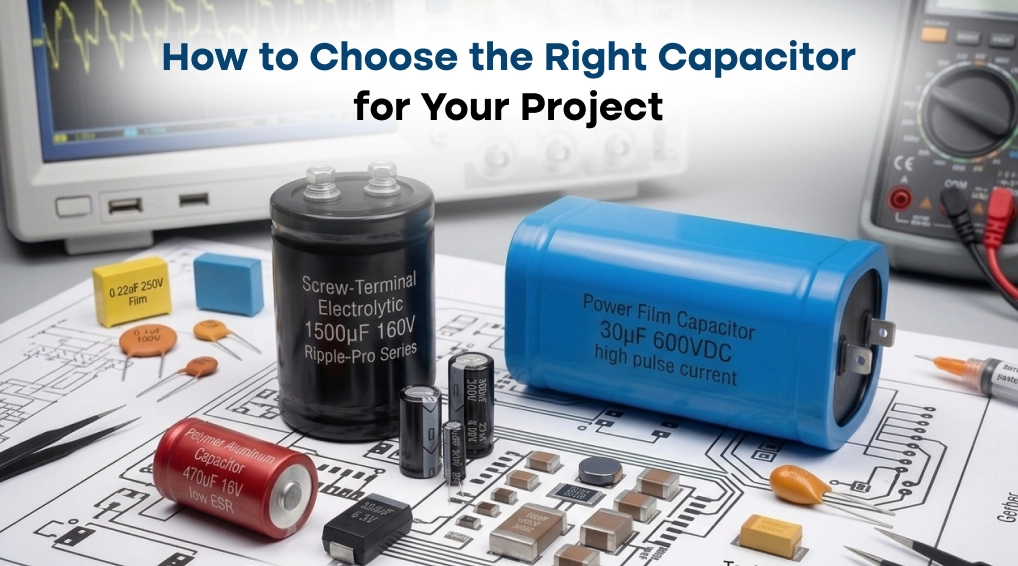
Smoothing Capacitor and Its Role in Rectifier Circuits
After rectification, the output from a half wave rectifier or full wave rectifier circuit is not pure DC but a pulsating voltage. This is where a smoothing capacitor, also known as a filter capacitor, becomes essential. Connected in parallel with the load, the smoothing capacitor helps to reduce the ripple factor by filtering out the AC component from the rectified signal.
During the positive half cycle, the capacitor charges up to the peak voltage, and during the negative half cycle or voltage dips, it discharges slowly, supplying current to the load. This process smooths out fluctuations, resulting in a more stable DC output for your dc power supply or battery charging circuit. The size of the smoothing capacitor is chosen based on the desired ripple factor, load current, and the frequency of the AC input. A larger capacitor value generally leads to a lower ripple voltage, but may also increase the physical size and cost of the component.
In summary, a properly selected smoothing capacitor is key to achieving a steady DC output and improving the performance of any rectifier circuit.
When Should You Use a Standard Rectifier Diode?
A standard rectifier diode is a good choice when:
- the circuit involves power rectification
- reverse current blocking is required
- a general-purpose power diode is needed
- the design uses conventional through-hole assembly
- you need a dependable diode for repair or replacement
Standard rectifier diodes are often selected for their power efficiency, thermal performance, and stable performance in general-purpose applications.
This makes it a common part for both commercial and service-related electronics work.
Why a 1000V 2A Rectifier Diode Is a Useful Launch Product
A standard 1000V 2A rectifier diode is a useful launch product because it supports many real-world use cases.
It is suitable for:
- repair counters
- service engineers
- basic power supply builds
- battery chargers
- circuits with DC loads
- electronic workshops
- educational use
- maintenance stock
Because it covers a practical range of voltage and current needs, it appeals to buyers who want a reliable standard diode rather than a highly specialized part.
Reading Datasheets: What to Look For
Selecting the right rectifier diode for your project means carefully reviewing the manufacturer’s datasheet to understand the key electrical parameters. Start by checking the peak repetitive reverse voltage (VRRM), which should always exceed the peak AC input voltage your circuit will encounter. This ensures the diode can reliably block reverse voltage without risk of breakdown.
Next, examine the forward voltage drop (VF)—a lower forward voltage drop means less power loss and higher efficiency, especially important in high efficiency and low voltage applications. For circuits operating at high frequency or in switching power supplies, pay close attention to the reverse recovery time (trr), as a shorter recovery time allows for faster switching speed and better performance in high frequency circuits.
Other critical parameters include the maximum forward current (IF), which must meet or exceed your circuit’s continuous load current, and the maximum junction temperature (Tj), which affects long-term reliability. The datasheet will also specify thermal resistance, which impacts heat dissipation and thermal management, as well as overall power handling capability.
By thoroughly evaluating these key electrical parameters—peak repetitive reverse voltage, forward voltage drop, reverse recovery time, current ratings, voltage rating, and thermal resistance—you can confidently select rectifier diodes that match your voltage demands, power handling needs, and system efficiency requirements. This careful approach ensures optimal performance and reliability in your dc power conversion or industrial power supplies.
Common Mistakes Buyers Make When Choosing a Rectifier Diode
Choosing only by current
A 2A diode may still be unsuitable if the reverse voltage rating is too low for the circuit.
Ignoring package type
The diode must fit the PCB layout or replacement position correctly.
Replacing with “any diode”
Not all diodes are interchangeable. A signal diode and a rectifier diode serve different purposes. For example, small signal diodes are designed for low-current, high-speed switching applications such as signal processing, voltage clamping, and waveform shaping, but they are not suitable for power rectification. Different diode types are suited for specific applications based on their switching speed and power loss characteristics.
Not checking the real application
A diode for power rectification should be selected differently from a diode used only for logic or switching signals.
Overlooking installation conditions
Heat, mounting style, and operating environment can also influence the right choice.
A Simple Example of Rectifier Diode Selection
Suppose you are working on a power-related circuit or repairing a board that needs a standard diode for rectification. In that case, a 1000V 2A DO204AC rectifier diode can be a practical option because it offers:
- strong reverse voltage rating
- moderate current handling
- conventional package style
- suitability for repair and PCB use
When selecting a rectifier diode, remember that power dissipation can be estimated using the formula P loss = V F × I F, where V F is the forward voltage drop and I F is the forward current. Choosing a diode with a lower forward voltage drop improves efficiency by reducing conduction losses and heat generation, which also helps in selecting the appropriate package type for thermal management.
This kind of diode is especially useful when you want a straightforward and dependable part for general rectification work.
Is a Rectifier Diode Good for Beginners?
Yes, but beginners should still understand the basics before buying:
- voltage rating
- current rating
- diode direction (rectifier diodes allow current to flow in only one direction)
- package compatibility
- intended circuit role
Once these points are clear, selecting the right rectifier diode becomes much easier.
For students and beginners, standard rectifier diodes are also useful components to keep in stock for learning and basic circuit building.
Final Thoughts
Learning how to choose the right rectifier diode helps you avoid wrong replacements, circuit failure, and unnecessary buying mistakes. The best diode is the one that matches the voltage, current, package, and application needs of your project, while also optimizing power efficiency, thermal performance, and stable performance.
A 1000V 2A standard rectifier diode is a practical option for many power supply, repair, and PCB applications because it offers a useful balance of reverse voltage capability, forward current handling, and conventional package compatibility.
If you are selecting diodes for your next electronic project, repair job, or workshop stock, choosing the right rectifier diode at the start will save time and improve reliability.
FAQs
How do I choose the right rectifier diode?
Choose the right rectifier diode by checking reverse voltage rating, forward current rating, package type, and actual circuit application.
What is a rectifier diode used for?
A rectifier diode is used to convert alternating current (AC) into direct current (DC) by allowing current to flow in only one direction. It is commonly used in power supplies, AC to DC conversion, and reverse current protection.
What does 1000V 2A mean in a rectifier diode?
It means the diode is designed for up to 1000V reverse voltage handling and 2A forward current handling.
Can I use any diode in place of a rectifier diode?
No, not all diodes are interchangeable. A rectifier diode should be chosen based on the circuit’s voltage, current, and application needs. Small signal diodes, for example, are designed for low-current, high-speed switching in signal processing or waveform shaping, and are not suitable for power rectification due to their limited current capacity. Always match the diode type to your specific application requirements.
Why is package type important in diode selection?
Package type matters because the diode must physically fit the PCB layout, replacement position, and assembly method.
Is a 1000V 2A rectifier diode good for repair work?
Yes, it can be a practical choice for many repair and general electronics applications where the required voltage and current ratings are suitable.


Leave a Comment
Your email address will not be published. Required fields are marked *